
· 10 min read
Balancing AI and Human Intelligence in Outsourcing
Discover how AI tools enhance HR, bookkeeping, and customer service while keeping human expertise at the heart of the operation.
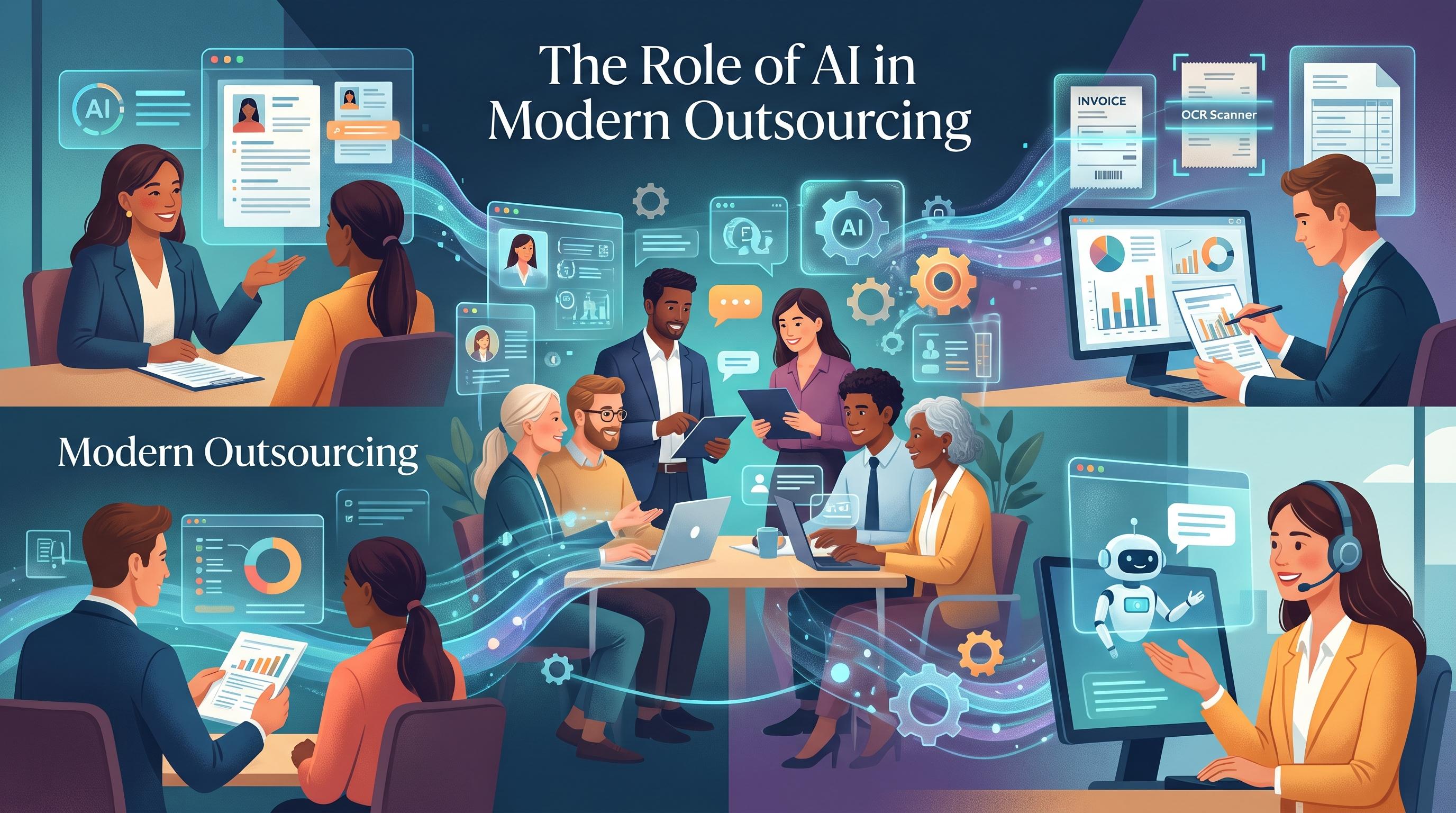
The Role of AI in Modern Outsourcing
The conversation around Artificial Intelligence (AI) often frames it as a replacement for human staff. However, for many businesses, the real value of AI lies in its ability to act as a powerful assistant. In the context of business process outsourcing, AI is not a substitute for the human team; it is a tool that allows people to focus on higher-value tasks that require empathy, critical thinking, and nuanced judgement.
By integrating AI into daily workflows, a BPO team can handle repetitive, data-heavy tasks with greater speed and accuracy. This shift does not remove the need for people. Instead, it elevates the role of the human professional, moving them from manual data entry or basic query handling to strategic oversight and complex problem-solving.
Enhancing HR through Intelligent Automation
Human Resources is, by definition, human-centric. Yet, the administrative burden of HR can often distract from culture-building and employee engagement. AI tools can support HR teams by streamlining the initial stages of recruitment and onboarding. For example, AI can help in sorting through large volumes of applications to identify candidates who meet specific criteria, ensuring that the human recruiter spends their time interviewing the most relevant talent.
Onboarding is another area where automation provides value. By using automated workflows for document collection and initial training modules, new hires receive a consistent experience. This allows HR managers to focus on the interpersonal side of the onboarding process, such as mentoring and integrating the new team member into the company culture. When the paperwork is handled by a system, the people can focus on the relationship.
Driving Accuracy in Bookkeeping and Finance
In the world of bookkeeping and finance, accuracy is non-negotiable. AI-driven software has changed the way financial data is processed. Tools that utilise Optical Character Recognition (OCR) can read invoices and receipts, automatically categorising expenses and flagging discrepancies. This significantly reduces the risk of manual entry errors that can lead to larger financial headaches down the track.
For a bookkeeping team, this means less time spent on 'the grind' of entry and more time spent on analysis. When the basic data is organised automatically, the human bookkeeper can provide more insightful reports. They can spot trends in cash flow or identify areas where a business might be overspending. The AI provides the data, but the human professional provides the context and the strategic advice necessary for a business owner to make informed decisions.
Customer Service: Where AI Meets Empathy
Customer service is perhaps the most visible area for AI integration. Chatbots and automated response systems can handle simple, frequently asked questions instantly, providing customers with 24/7 support for basic needs like tracking an order or checking a balance. This immediate response improves the customer experience for simple transactions.
However, complex issues still require a human touch. Sentiment analysis tools can help by identifying when a customer is frustrated or when a situation requires a more delicate approach. In these instances, the AI can escalate the query to a human agent, providing them with the full history of the interaction so the customer doesn't have to repeat themselves. This ensures that the human team is available for the moments that truly matter, such as resolving a unique complaint or providing specialised technical support.
Implementing a Human-Centric AI Strategy
If you are considering how to integrate AI into your own operations or through an outsourced partner, a practical approach is essential. It is often best to start by identifying the most repetitive tasks in your organisation. These are usually the best candidates for automation. Once these tasks are handled by AI, you can redirect your team's energy toward projects that require creative thinking or emotional intelligence.
Training is also a critical component. A team that understands how to use AI tools effectively will be more productive and less concerned about the technology's impact on their roles. Transparency with your staff about why you are implementing these tools helps to build a culture of innovation rather than one of uncertainty.
Ultimately, the goal of using AI in HR, bookkeeping, and customer service is to provide a better service to the end client. By combining the speed of machine processing with the discernment of human intelligence, businesses can scale more effectively while maintaining the personal connections that drive long-term loyalty. The most successful outsourcing models are those that recognise technology as an enabler for the people on the ground.
- outsourcing
- artificial intelligence
- hr support
- bookkeeping
- customer service